

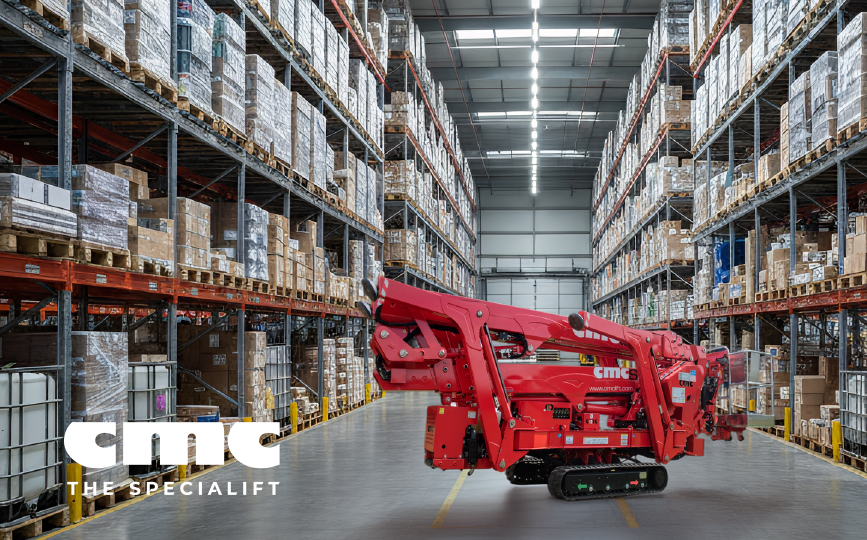
Aerial platforms in logistics and goods handling
Efficiency and safety are fundamental aspects in the field of logistics and goods handling. Adopting advanced technologies is essential to optimise storage, loading, unloading and distribution processes. Aerial platforms play a key role among the most innovative and versatile solutions. These devices allow you to work safely and efficiently at different heights, significantly improving warehouse operations and goods management in industrial and commercial environments.
1. Aerial platforms: definition and types
Aerial platforms are mechanised equipment designed to lift operators and materials to high places. They are divided into different types, each adapted to specific operational requirement:
- Self-propelled aerial platforms: ideal for industrial and logistics environments thanks to their mobility and versatility.
- Scissor platforms: perfect for vertical lifting in confined spaces, often used in warehouses with high shelving.
- Telescopic and articulated platforms: used for high points that are difficult to reach and to overcome structural obstacles such as systems, beams or high shelves.
- Column lifts: practical tools for picking and storage operations in automated warehouses.
- Telescopic boom platforms: guarantee a wide range of action and are used in outdoor environments such as ports and logistics sites.
2. The importance of aerial platforms in logistics
Integrating aerial platforms into logistics processes offers numerous benefits:
- Increased productivity: they speed up the loading and unloading of goods, reducing downtime and improving overall efficiency.
- Improved safety: equipped with advanced protection systems, they minimise the risk of accidents in the workplace, in many cases replacing less safe traditional methods such as ladders or temporary scaffolding.
- Operational versatility: thanks to the possibility of operating in confined spaces and at different heights, they easily adapt to various logistics settings, from distribution centres to vertical warehouses.
- Optimisation of space: they facilitate the use of high shelving, increasing the storage capacity of warehouses without the need for structural expansion.
3. Practical applications in goods handling operations
Aerial platforms are used in multiple areas of logistics:
- Vertical warehouses: essential for reaching goods stored at great heights, reducing the risk of injury due to the use of ladders or improper means.
- Distribution centres: used for sorting and organising shipments, especially in large centres that handle high volumes of goods.
- Airports and ports: they facilitate the loading and unloading of containers and bulky goods, optimising handling times and reducing operating costs.
- E-commerce and large-scale distribution: they support the management of inventory in large logistics centres, where the speed and accuracy of operations are essential to ensure fast, reliable deliveries.
- Manufacturing industry: they are used in production lines for the handling of heavy materials or facility maintenance.
4. Technological innovations and the future of aerial platforms
The aerial platform industry is undergoing rapid technological changes. The main innovations include:
- Automation and digitisation: the integration of IoT systems allows remote monitoring and predictive maintenance, thus reducing downtime and improving efficiency.
- Electrification: the adoption of electric aerial platforms reduces the environmental impact and improves energy efficiency, eliminating harmful emissions typically produced by combustion engines.
- Advanced safety: sensors and stabilisation systems improve reliability and reduce operational risks, thus ensuring optimal protection for operators.
- Integration with robots and drones: innovative solutions that increase the precision and speed of handling operations, especially in automated warehouses.
- Self-driving systems: some platforms are equipped with technologies that allow automated handling, reducing the need for physical operators and improving overall safety.
5. Safety standards and regulations
The use of aerial platforms is governed by strict regulations that guarantee the safety of operators and the facilities. The main regulations include:
- Machinery Directive 2006/42/EC: it regulates the design and safety of aerial platforms in the European Union.
- EN 280 standard: it lays down the safety requirements for mobile lifting platforms.
- Mandatory operator training: in many countries, aerial platform operators are required to participate in specific training courses and obtain certifications for safe use.
6. Economic considerations and sustainability
Investing in aerial platforms is a strategic choice for logistics companies. The upfront costs may be high, but the benefits in terms of operational efficiency and risk reduction justify the investment.
In addition, modern solutions are increasingly focused on sustainability, with energy-efficient electric models and innovative materials that reduce the environmental impact. The adoption of these technologies allows companies to reduce their ecological footprint and comply with increasingly stringent environmental regulations.
Aerial platforms are indispensable tools in modern logistics. Their versatility, safety and ability to optimise operations make them a strategic choice for sector-based companies. With technological evolution and the adoption of increasingly advanced solutions, their role will continue to grow, helping to make the logistics sector more efficient, safe and sustainable. Innovation and integration with automated systems represent the future of goods handling, guaranteeing ever faster and more efficient processes.